Caño Cristales: the river where the rainbow fell
Between June and November, a river in the Serranía de La Macarena turns red, yellow, green and blue.
This story is pending editorial review. Facts, dates and sources are still being checked.
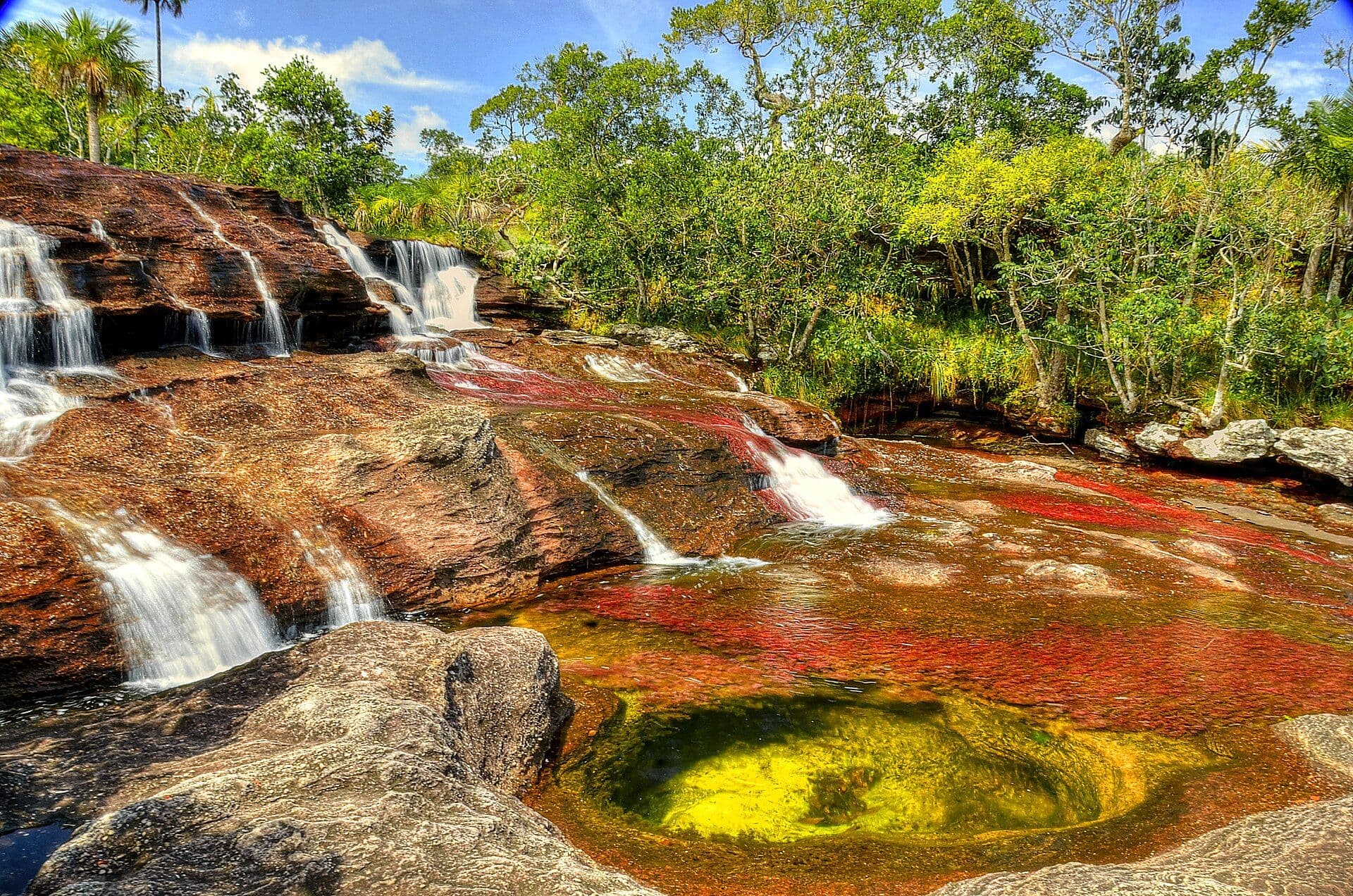
People call it “the river of five colours” or “the rainbow that melted”. For most of the year Caño Cristales, in Meta, Colombia, runs as clear water over dark rock. But for a few months its bed lights up in red.
What people say
They say a rainbow fell from the sky and was trapped among the stones of the river, and that it only wakes when the water drops and the sun reaches the bottom. For the peoples of the forest and the plains, rivers generally have owners: spirits of the water whose permission is asked before crossing or fishing. That idea, common across the region, gives the tale its meaning.
What is genuinely old
Downstream, on the rocks of Angosturas II beside the Guayabero river, there are rock paintings of animals, suns and human figures in red, dated by archaeological studies to between about 8,100 and 4,000 years ago (work by Gonzalo Correal and by José Iriarte and colleagues).
Why it changes colour
The red comes from an aquatic plant found only in this region, Macarenia clavigera, which colours in the sunlight when the water level drops. Together with yellow and green algae, sand and the reflection of the sky, it forms the “rainbow”. The rock of the riverbed belongs to the Guiana Shield and is more than a billion years old.
Plan your visit
Practical notes for travelling there. Conditions, schedules and prices change: check before you go.
Good to know
- Visiting season: roughly June to November; the river closes in the dry season (Cormacarena and National Parks).
- Access is through La Macarena (by plane from Villavicencio or Bogotá) and a guide is compulsory.
- Sunscreen and insect repellent are forbidden in the river; daily visitor numbers are limited.
Related stories
Nature & Geography·Colombia
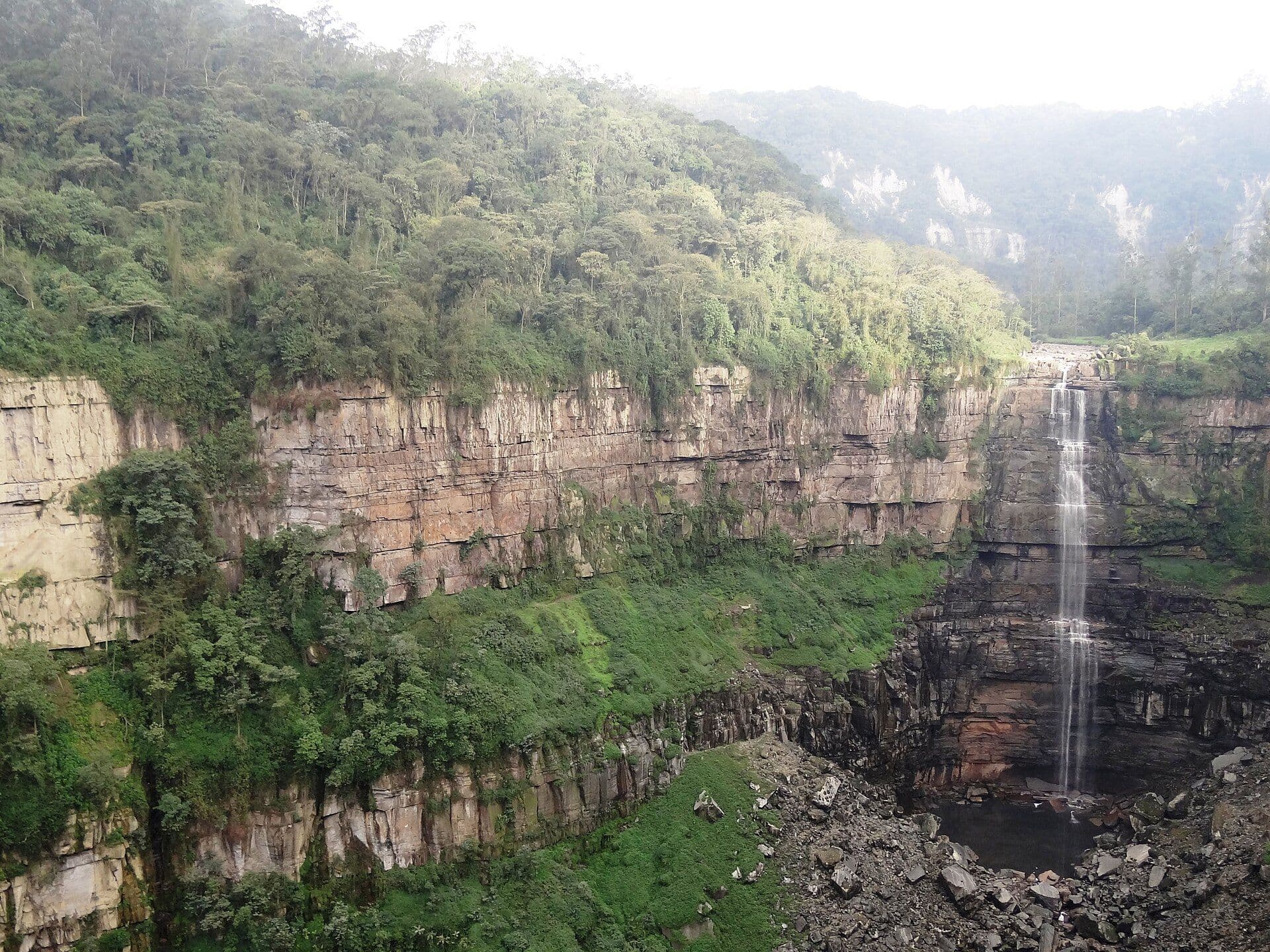
Tequendama Falls: Bochica breaks the rock
A flood covered the savannah of Bogotá. A white-bearded sage opened the mountain with his staff, and the water poured away down a waterfall.
Extraordinary Places·Colombia
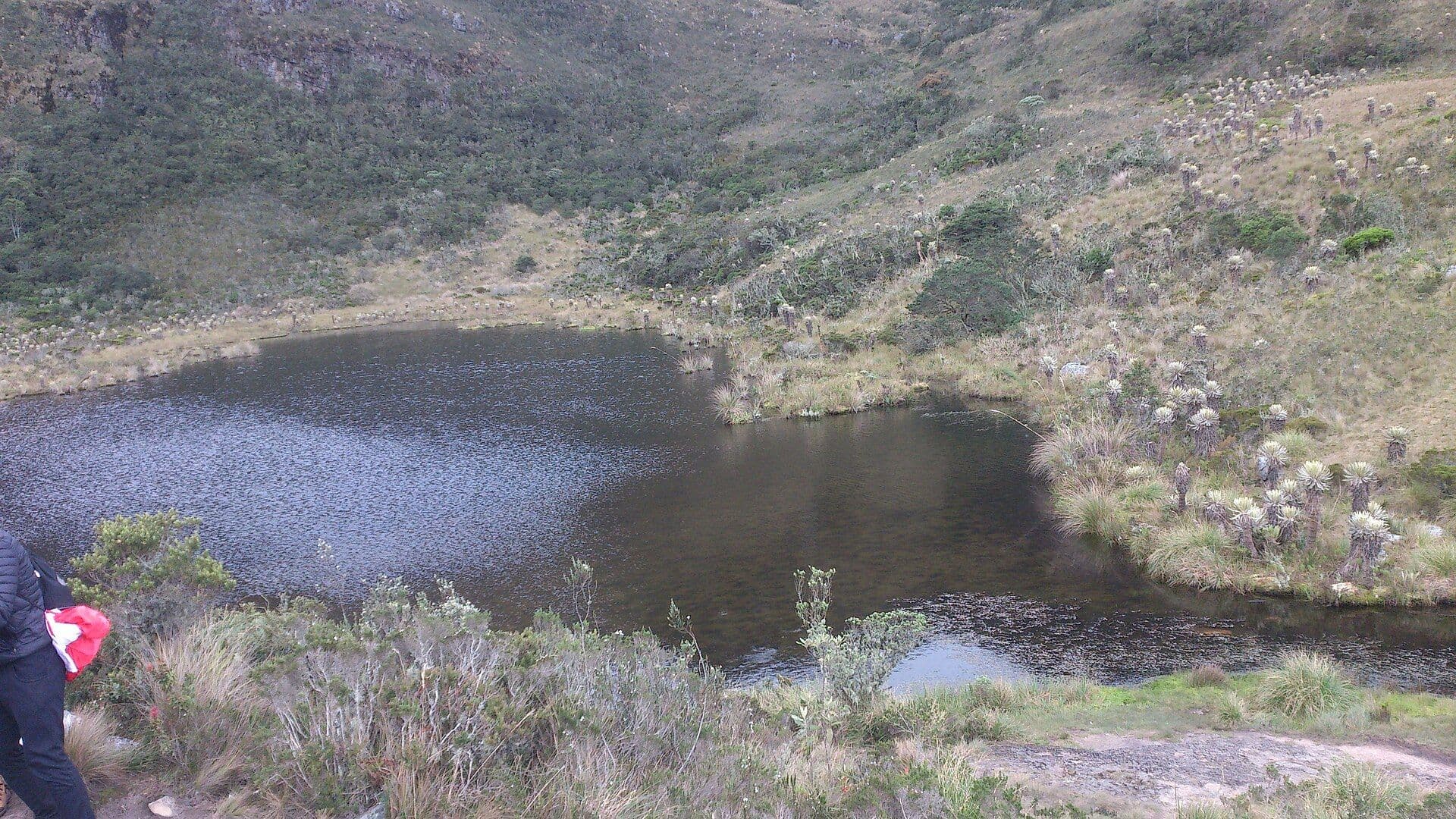
Iguaque Lagoon: Bachué, the Muisca mother of humanity
From a lagoon high in the páramo a woman emerged carrying a child. From them, the Muisca say, we are all descended.
Peoples & Communities·Colombia
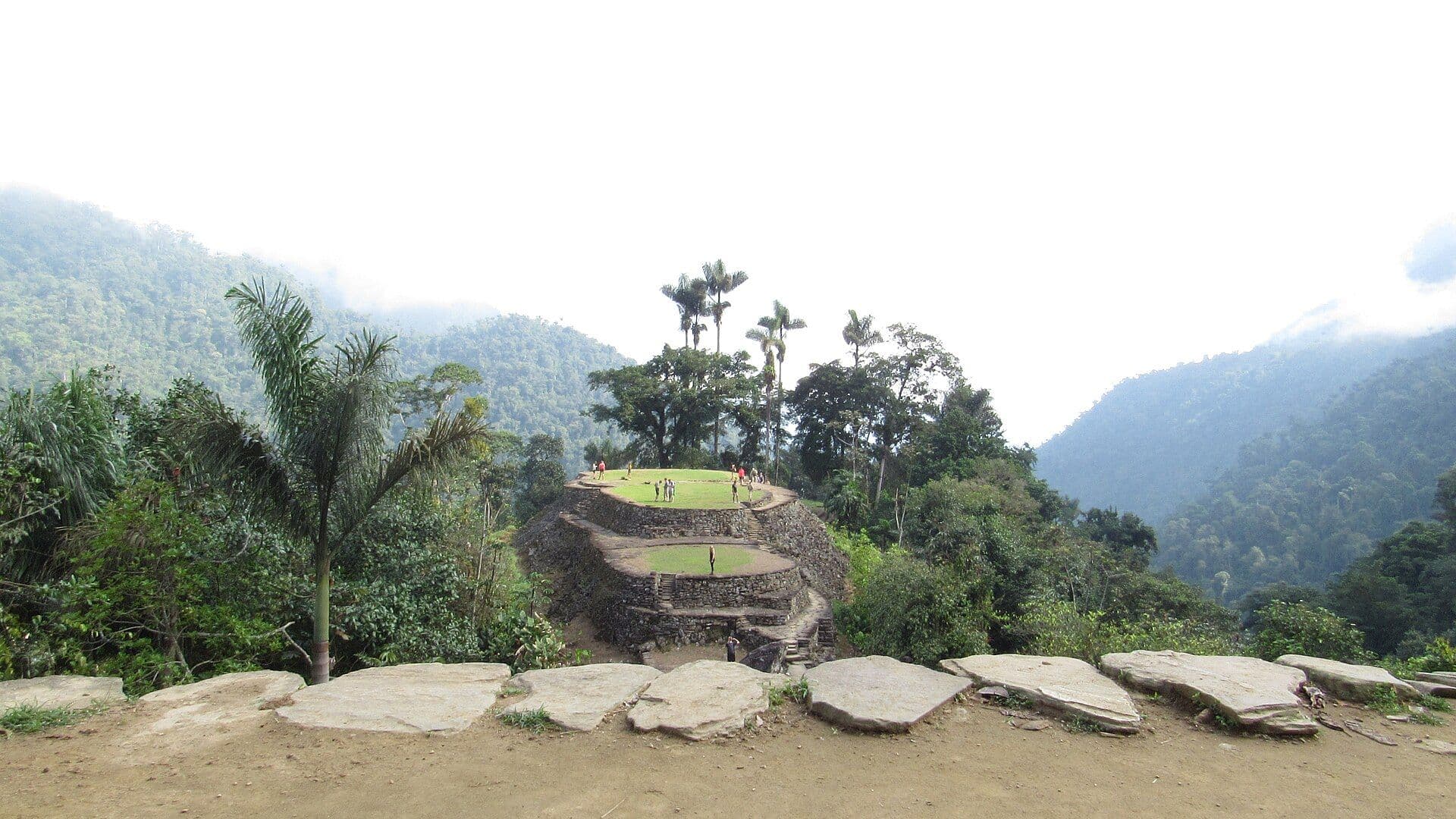
Sierra Nevada de Santa Marta: the Kogi Heart of the World
For the peoples who live on it, this mountain beside the Caribbean is the heart of the planet. In 1990 they came down to warn us that it was falling ill.