Manaus and the Meeting of the Waters: the spirits of the Amazon
Where a black river and a brown river run side by side without mixing, the people of the Amazon tell of dolphins who dance and serpents as long as the river.
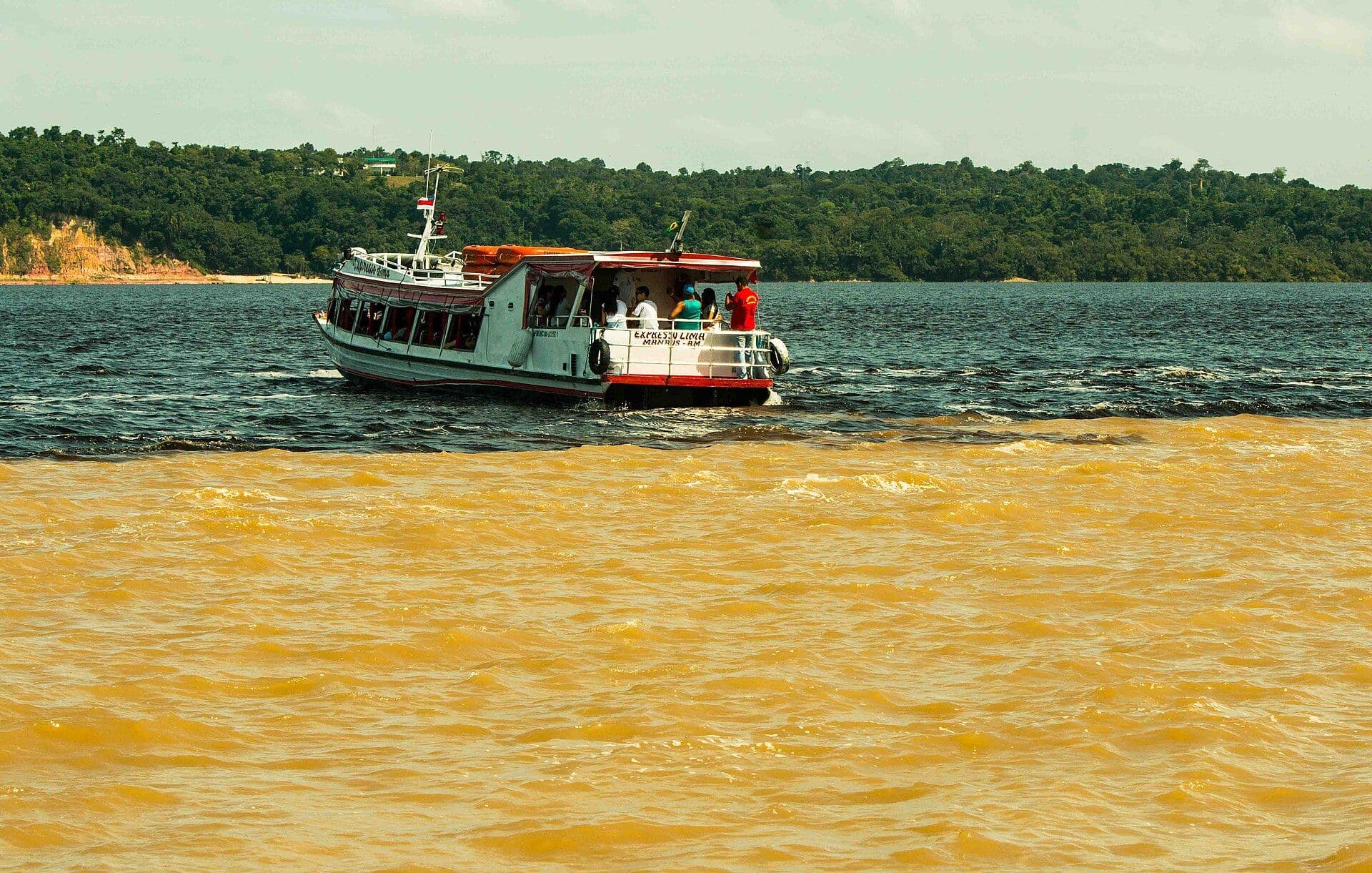
A short boat ride from Manaus, the dark water of the Rio Negro meets the pale, muddy water of the Solimões, and for kilometres the two flow side by side like a line drawn on the river. Manaus is the gateway to the largest rainforest on Earth, and a good place to listen to its stories.
Two rivers that refuse to mix
The Rio Negro is dark, warm and acidic, coloured by the decomposing vegetation of the forest. The Solimões, as the upper Amazon is called in Brazil, is cooler, faster and loaded with sediment from the Andes. Because of these differences in temperature, speed and density, the two waters run side by side for several kilometres below Manaus before they finally merge.
Manaus itself grew rich during the rubber boom of the late nineteenth century, when it built the Teatro Amazonas, an opera house in the middle of the jungle that is still in use.
A world made of water
The Amazon basin spreads over some seven million square kilometres and nine countries and territories, most of it in Brazil. The river carries more water than any other on Earth. For the people who live along it, the river is road, market and pantry, and also a place of danger: currents, storms and creatures that are not always visible.
The legends of the Amazon were born in that setting. They mix Indigenous traditions with stories brought by Portuguese, Spanish and African populations over centuries.
The boto, the dolphin who goes dancing
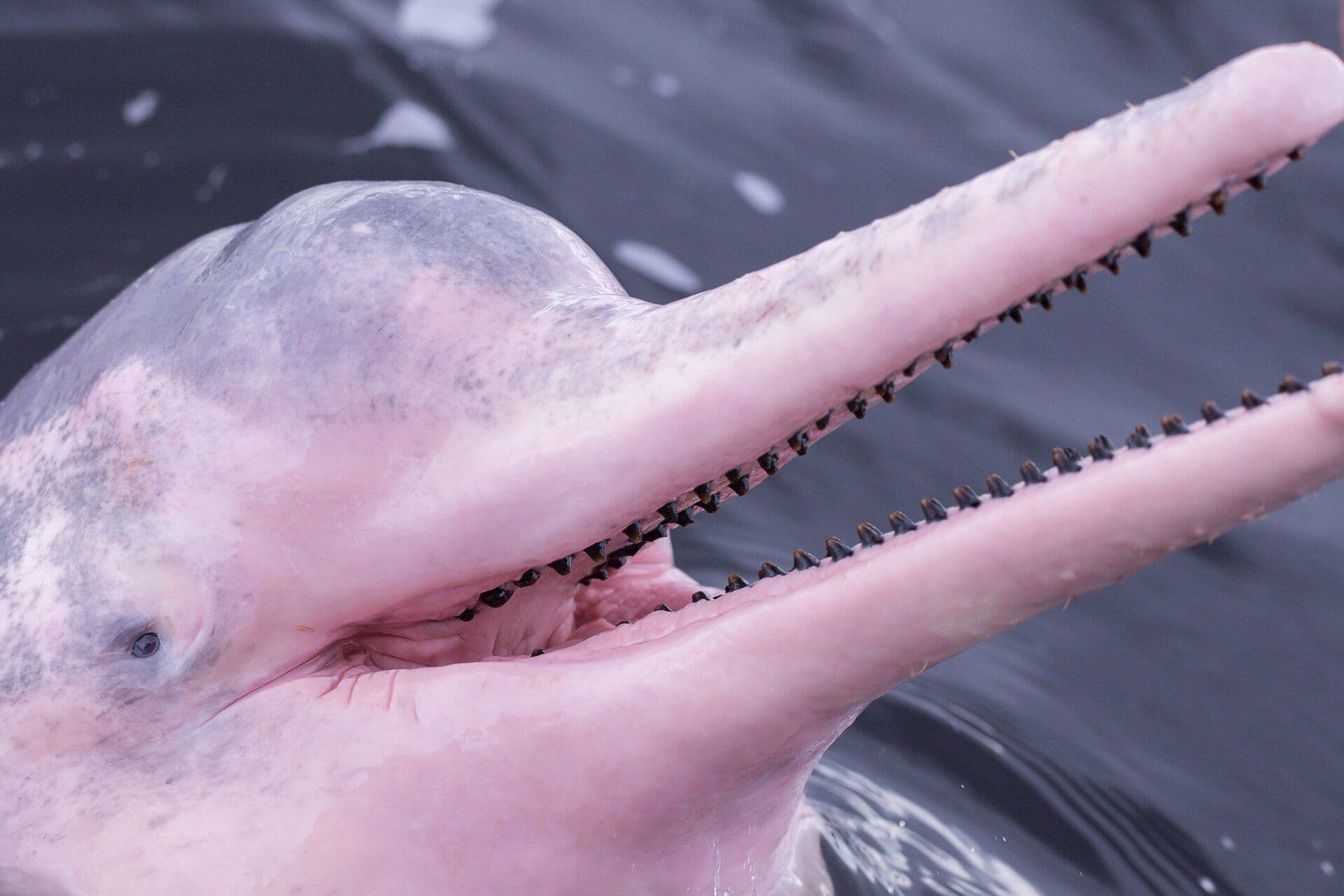
The pink river dolphin, called boto in Brazil, is the protagonist of the best-known Amazon legend. On festival nights, it is said, a boto leaves the water transformed into a handsome man dressed in white, wearing a hat to hide the breathing hole on top of his head. He dances, charms a young woman and disappears before dawn, returning to the river.
In some communities the story was used to explain unexpected pregnancies, and children were jokingly called “children of the boto”. Fishermen traditionally avoided harming the animal, which was believed to be able to bewitch people.
Guardians of the forest
The Curupira, in Brazilian folklore, is a small being with fiery red hair and feet turned backwards, so that anyone who follows his tracks walks in the wrong direction. He protects animals and trees and punishes hunters who kill more than they need, leading them in circles until they are lost.
The Iara, a woman of the waters, sings from the river and draws men into its depths. The Mapinguari is a huge, foul-smelling creature with a mouth on its belly, said to roam the deep forest.
The mother of the water
In the Peruvian Amazon, people speak of the Yacumama, “mother of the water” in Quechua: an enormous serpent that lives in rivers and lakes and can swallow whatever comes near. Lagoons and whirlpools are explained as her resting places, and some communities still approach certain waters with caution and respect.
Taken together, these figures share a message: the forest and the river have owners, and those who take without restraint will pay for it.
Naiá and the giant water lily
The Tupi-Guaraní peoples told that Jaci, the Moon, carried the most beautiful young women up to the sky and turned them into stars. Naiá, a girl of the village, dreamed of becoming one of them. Every night she climbed the hills to reach the Moon, but never did.
One night she saw the Moon reflected in the water of a lake, so close that she believed the Moon had finally come down for her. She leaned over to touch it, fell into the water and drowned. Moved, the Moon did not take her to the sky as a star, but turned her into a star of the water: an enormous flower that opens only in the moonlight — the giant water lily, Victoria amazonica, which can be seen in the lakes around Manaus.
Plan your visit
Practical notes for travelling there. Conditions, schedules and prices change: check before you go.
- Base town
- Manaus (Amazonas, Brazil)
- Best time to go
- High water, roughly March to July, lets canoes glide through flooded forest; low water, around September to December, uncovers river beaches and forest trails.
- Getting there
- Manaus has an international airport and is the main gateway to the Brazilian Amazon. Boat trips leave the city for the Meeting of the Waters, and lodges upriver offer stays in the forest reached by boat.
Good to know
- Check vaccination advice (yellow fever) well before travelling.
- Use repellent and long sleeves at dusk.
- The Teatro Amazonas, built in the rubber boom, is worth a visit in the city.
Related stories
Legends & Folklore·Argentina
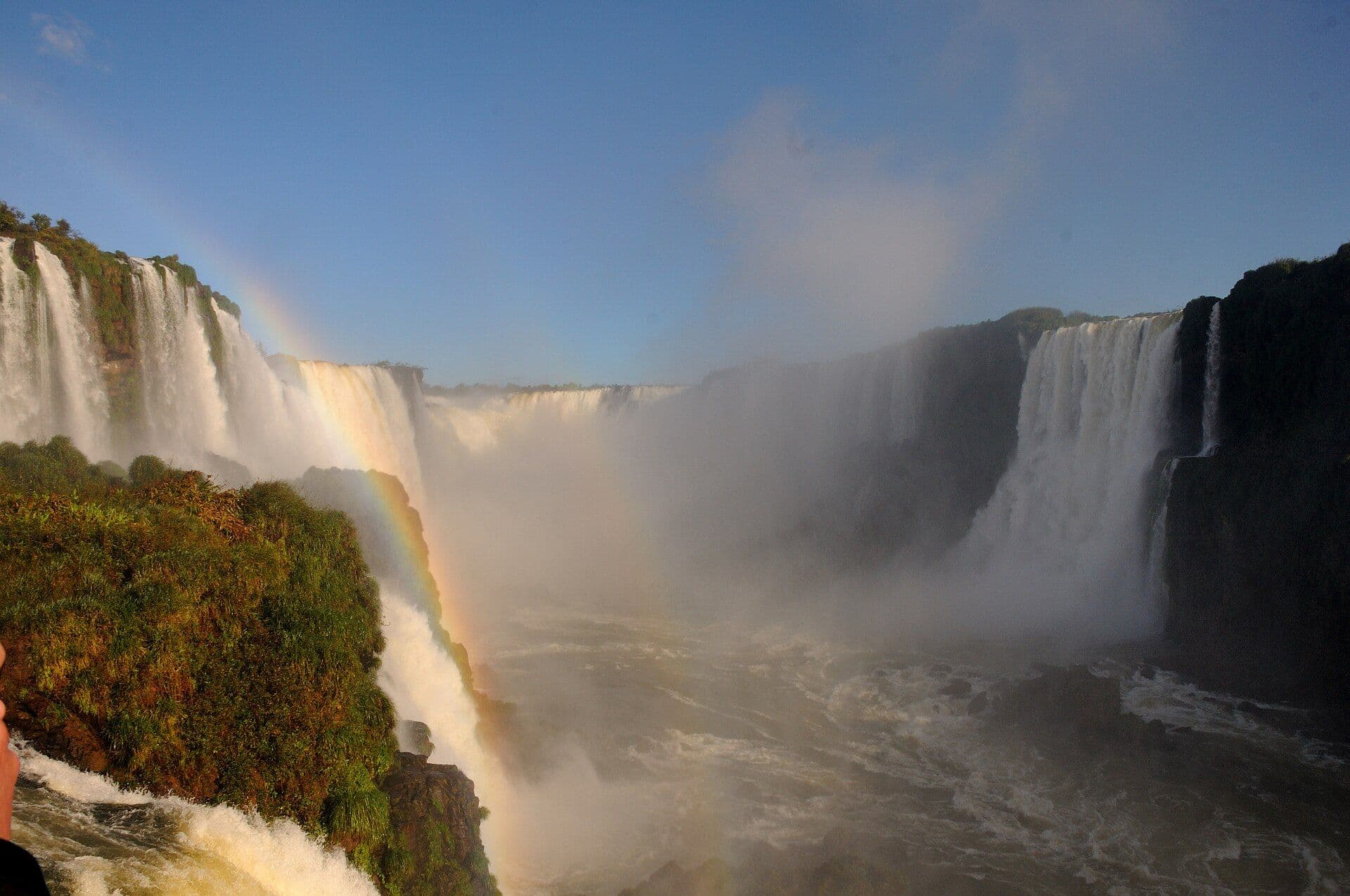
Iguazú Falls: the legend of Naipí and Tarobá
A serpent god tore the earth open to keep two lovers apart. The oldest written version of the story was told beside the falls in 1901.
Culture & Traditions·Venezuela
Sorte Mountain: María Lionza, queen of the mountain
Daughter of a chief, guardian of the waters, riding a tapir. Thousands of Venezuelans climb her mountain in Yaracuy every year.
Nature & Geography·Peru
Iquitos: the Yacuruna and the Chullachaqui, owners of the river and the forest
Beneath the Amazon there are cities of water people. And in the forest, someone with your father’s face invites you to follow him. Look at his feet.