Poás Volcano: the rualdo bird that sang to the volcano
To save a maiden, a bird sang to the volcano until it grew calm. It never sang again.
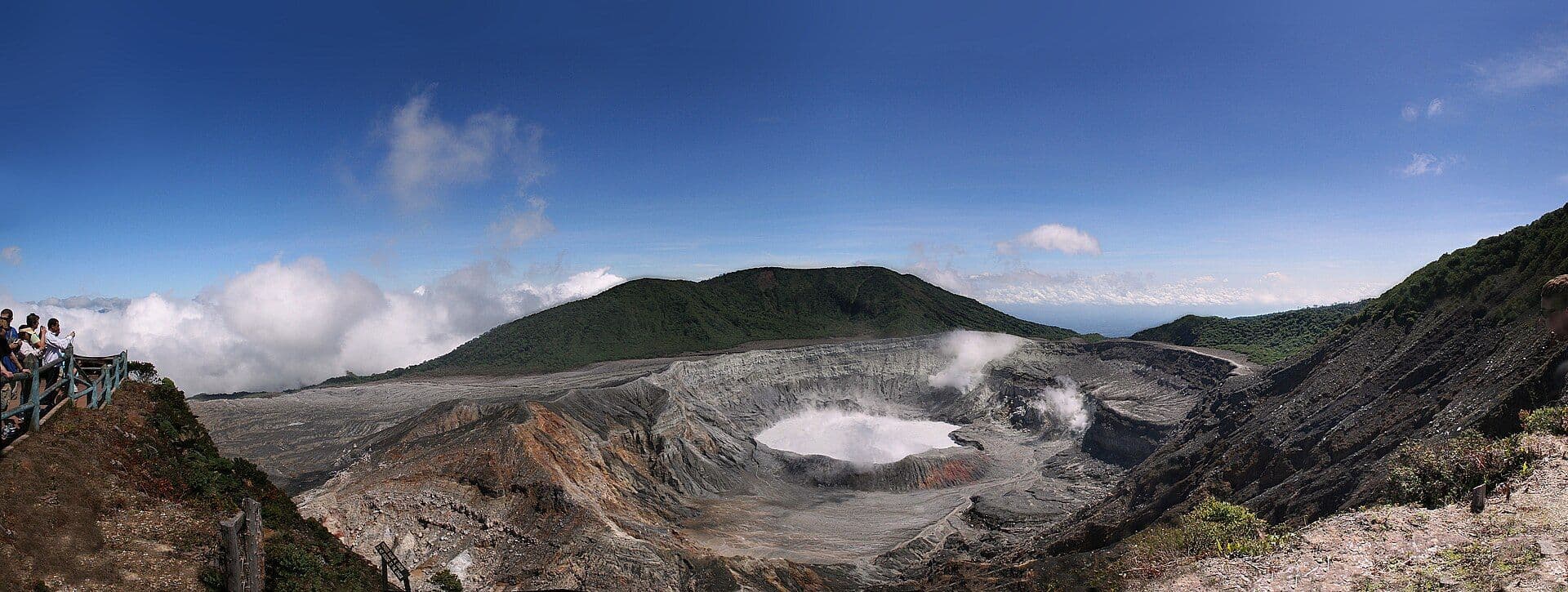
Poás Volcano, an hour from San José in Costa Rica, has one of the widest craters in the world, with a hot, acidic lake that appears and disappears. Beside it lies a cold lake, Botos. Its best-known legend is the story of the rualdo.
The legend
At the foot of the volcano lived a tribe, and among them an orphaned maiden. One day she found a little bird, a rualdo, also an orphan; she cared for it and they became inseparable. Every day the rualdo sang for her with the most beautiful voice in the forest.
The volcano began to roar. The elders decided that to calm it they must offer it the most beautiful young woman: the maiden. As she was being led to the crater, the rualdo flew to the rim and began to sing to the volcano with all its strength, the most beautiful song ever heard. The volcano grew calm, its vapours died down and the maiden was saved.
But the rualdo, which had given all its song, never sang again. Some versions say that the Laguna Caliente was born of that pact between the bird and the volcano.
The volcano
The main crater is about 1.3 km across; the Laguna Caliente (about 300 m across) is one of the most acidic lakes in the world and has dried up several times with volcanic activity.
Botos Lagoon, in a neighbouring crater, holds cold water.
Poás Volcano National Park closes temporarily when activity increases (OVSICORI monitoring).
Plan your visit
Practical notes for travelling there. Conditions, schedules and prices change: check before you go.
Good to know
- Entry by online reservation (SINAC); short visits to the crater viewpoint, with a helmet.
- Arrive early: clouds usually cover the crater by midday.
- Combine with La Paz Waterfall Gardens and the coffee farms of the Central Valley.
Related stories
Nature & Geography·Peru
Iquitos: the Yacuruna and the Chullachaqui, owners of the river and the forest
Beneath the Amazon there are cities of water people. And in the forest, someone with your father’s face invites you to follow him. Look at his feet.

Nature & Geography·Argentina
Patagonia: Elal, the hero who arrived at El Chaltén on a swan
The Tehuelche say their creator hero crossed the sea on a swan and landed on the summit of Fitz Roy. From there he spread life across Patagonia.

Nature & Geography·Mexico
The Tule Tree: the tree planted by the priest of the wind
The widest trunk in the world grows in a village in Oaxaca. The Zapotecs say a priest of Ehecatl planted it 1,400 years ago.