The Uros, a people who live on islands they weave
In the Bay of Puno, families build their homes on platforms of totora reed that must be renewed again and again.
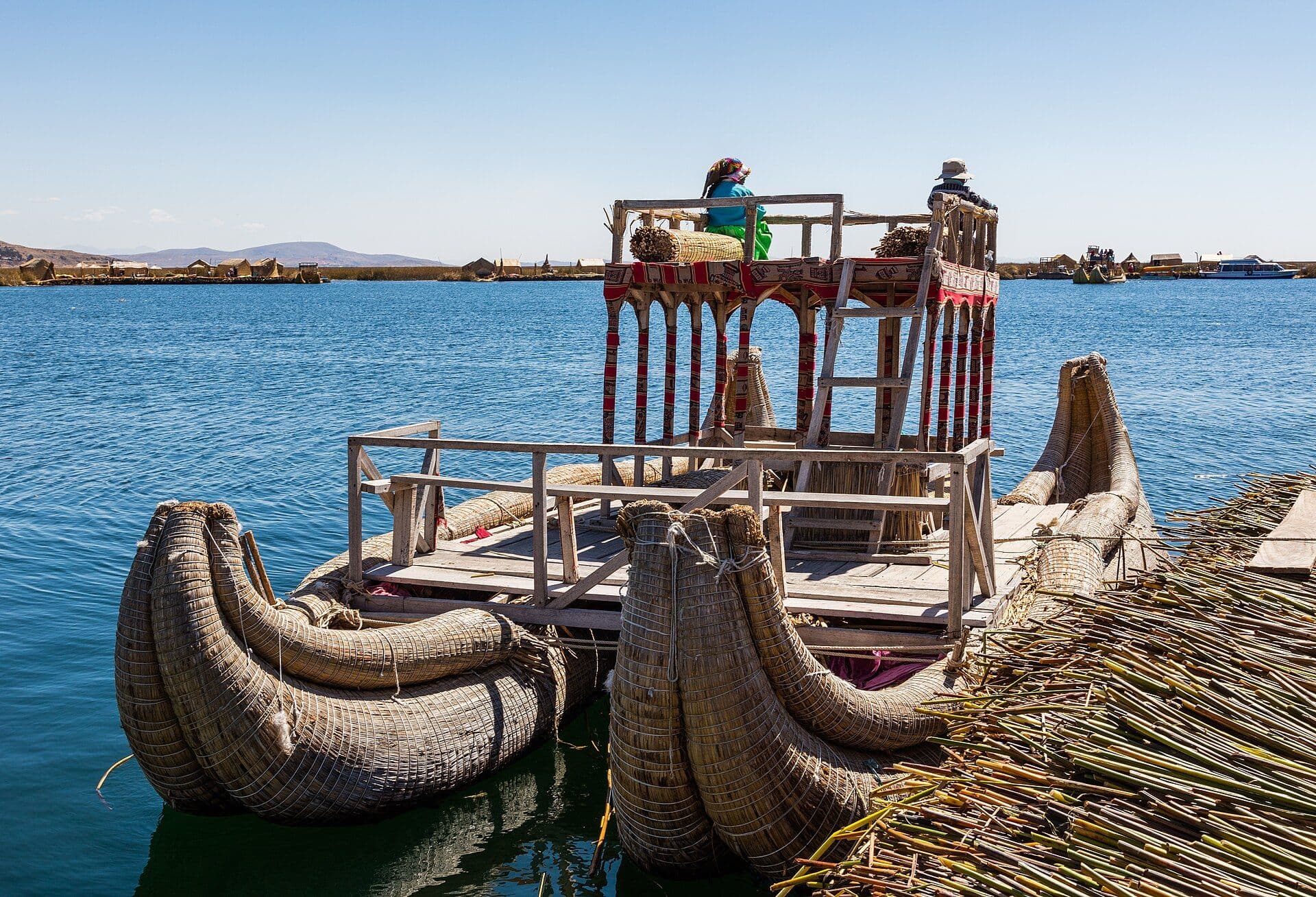
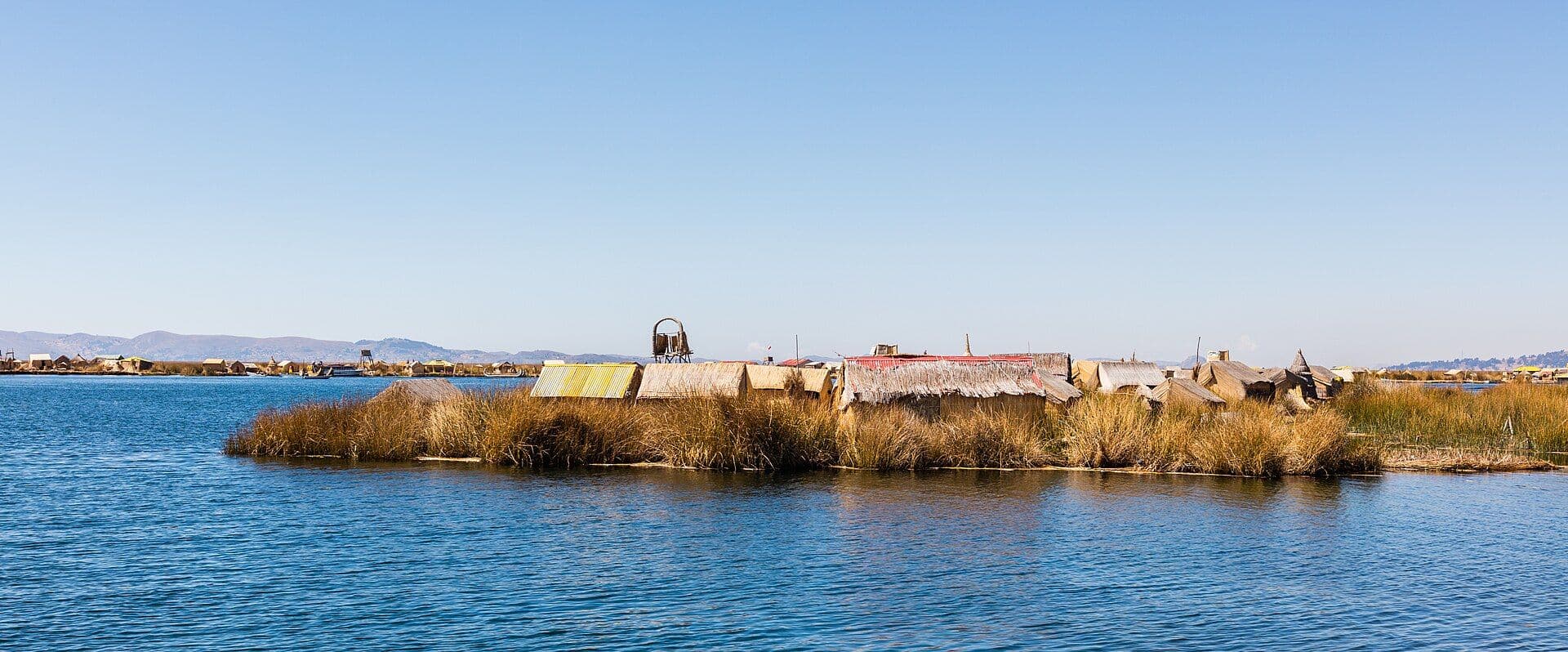
From the shore of Puno, the first thing you see is a golden smudge on the water. Up close it becomes a village: houses, watchtowers and boats, all made from the same reed. The islands of the Uros are not anchored rock but layers of plant matter that float, and their story is tied to a people the Andes have long described as different.
An island made of reeds
Each island rests on blocks of totora roots, a reed that grows in the shallow parts of the lake. The roots are cut, tied together and anchored, and layer upon layer of dried reeds is laid on top. As the lower layers rot in the water, new ones must be added on the surface, so the island is never finished: it is maintained, constantly, by the families who live on it.
Totora is used for almost everything: roofs, walls, mats and the characteristic boats with curved prows. The tender white base of the stem is also eaten.
Who are the Uros?
The Uru were one of the oldest peoples of the Titicaca basin and the Altiplano, recorded by Spanish authorities as distinct from the Aymara and Quechua around them. Groups of Uru still live in different parts of Bolivia and Peru. The families of the floating islands near Puno speak Aymara today, after centuries of contact and intermarriage, and their original language is no longer spoken among them.
A frequently repeated explanation is that the Uru moved onto the lake to escape the expansion of more powerful neighbours, first the Colla and later the Incas. It is plausible, but it should be read as a hypothesis rather than an established fact.
Life between tradition and tourism
Today, tourism is a major source of income for the islands closest to Puno. Visitors are shown how the islands are built and are offered textiles and crafts. Some critics describe the experience as staged; island families argue that tourism is what allows them to keep living on the lake. Both things can be true at the same time.
Plan your visit
Practical notes for travelling there. Conditions, schedules and prices change: check before you go.
- Base town
- Puno (Peru)
- Best time to go
- May to October, the dry season, for clear skies; Puno is cold at night all year.
- Getting there
- Boats leave the port of Puno for the floating islands, a short ride across the bay. Many trips continue to the islands of Taquile or Amantaní, where families offer homestays.
Good to know
- Buy crafts directly from the island families.
- Ask before photographing people.
- Homestays on Amantaní or the Uros give a slower, more personal visit.
Related stories
Nature & Geography·Peru
Iquitos: the Yacuruna and the Chullachaqui, owners of the river and the forest
Beneath the Amazon there are cities of water people. And in the forest, someone with your father’s face invites you to follow him. Look at his feet.
Extraordinary Places·Peru
Huacachina: the princess who became a mermaid in the desert
Among the dunes of Ica lies a green lagoon. People say it was formed by the tears — or the broken mirror — of a princess.
Nature & Geography·Peru
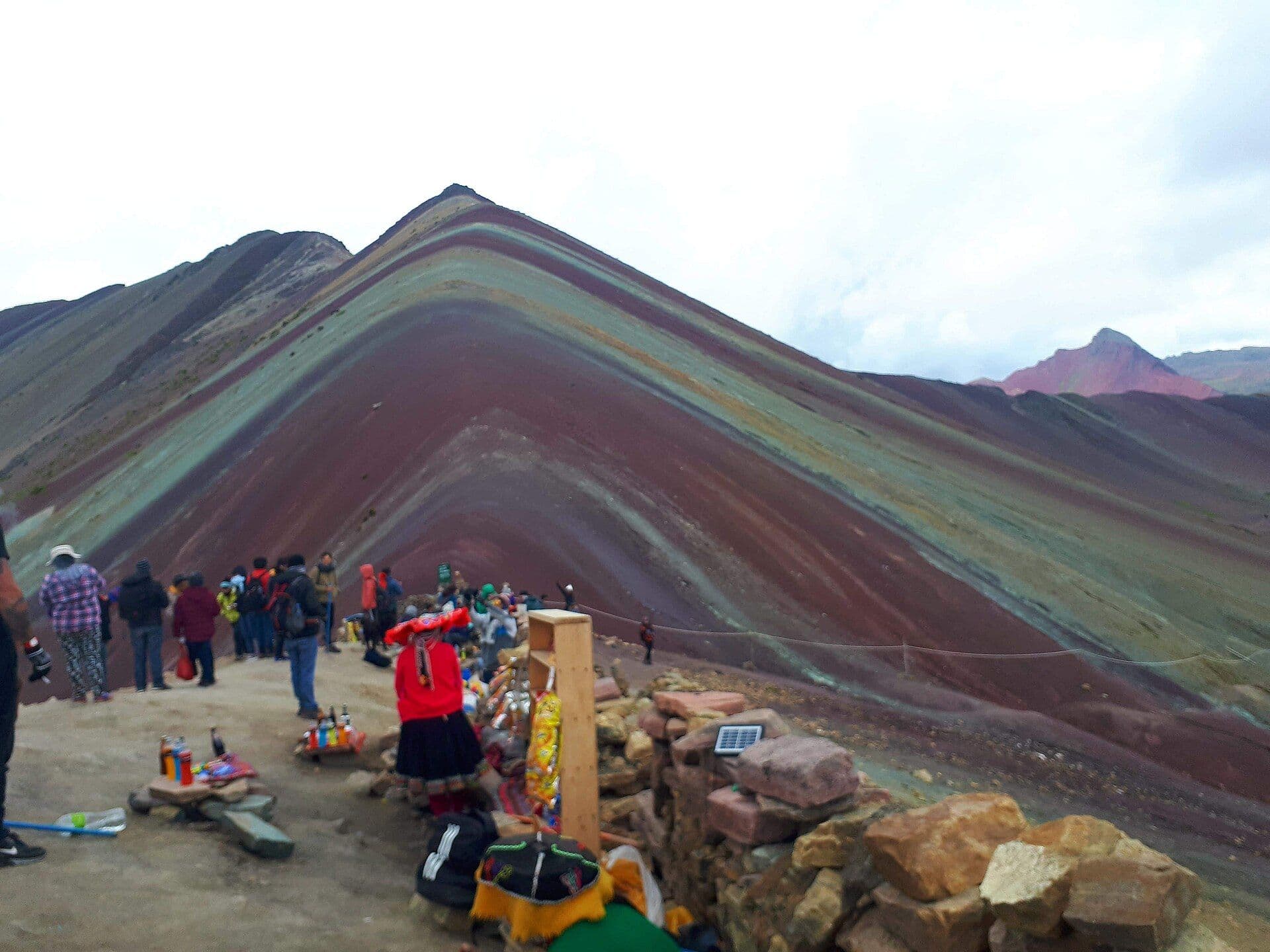
Rainbow Mountain and Ausangate: the apu who gives the water
Thousands of tourists climb to see the rainbow mountain. A few kilometres away, every year, 90,000 pilgrims climb to a glacier to honour the mountains.