El Dorado was a man before it was a city
The most famous treasure legend of the Americas began with a Muisca ceremony on a mountain lagoon near Bogotá.
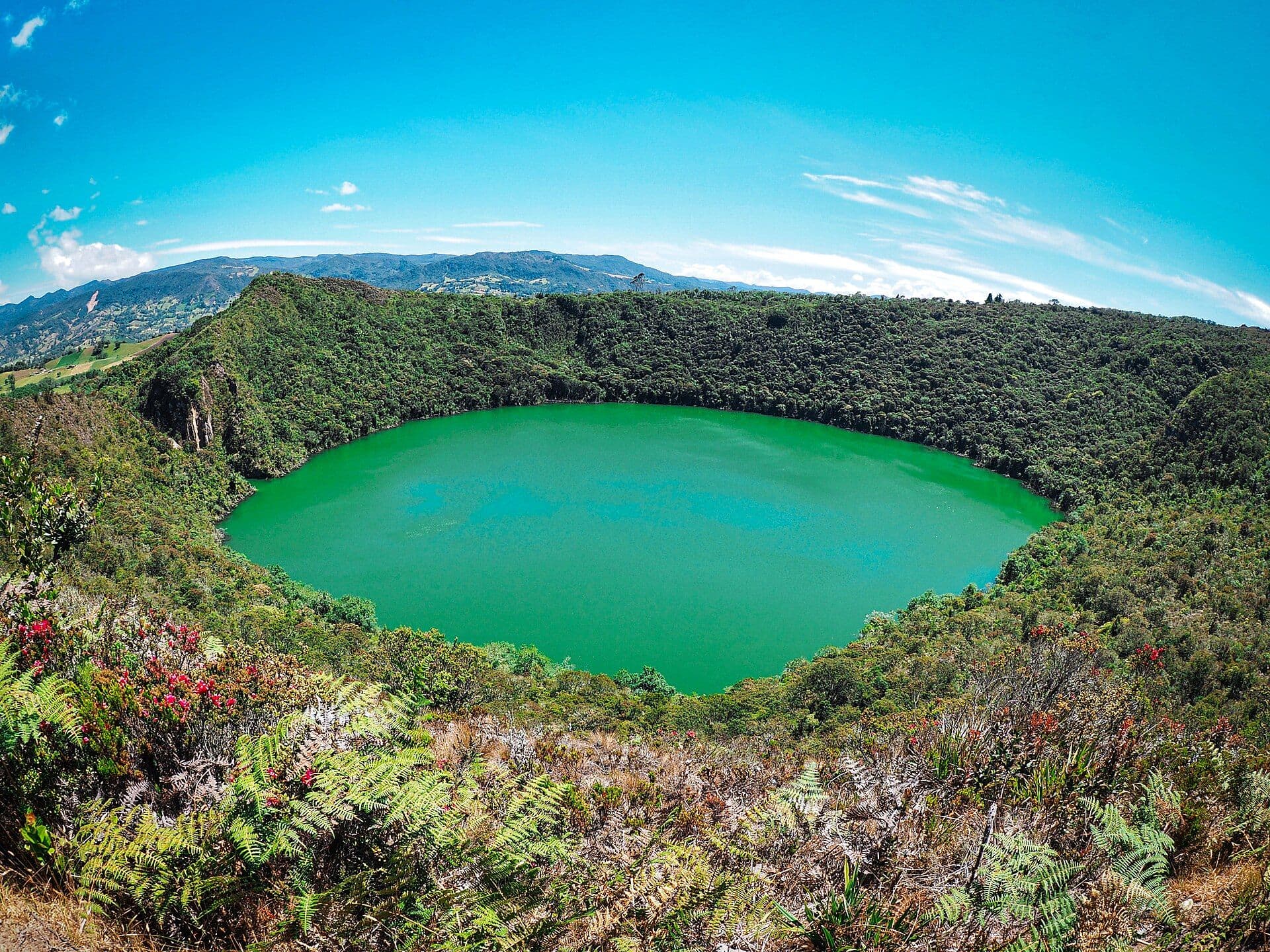
For three centuries, Europeans searched the jungles and mountains of South America for a golden city. The ceremony that started it all took place on a small round lagoon in the Colombian Andes, and the gold was not hidden in streets or temples: it was thrown into the water.
The gilded one
In Spanish, el dorado means “the gilded one”. In the first accounts it referred to a person, not a place. The Muisca, who lived in the highlands around present-day Bogotá when the Spanish arrived in 1537, were skilled goldsmiths and traded widely for gold, since there was little of it in their own territory.
Colonial writers described a ceremony linked to the lagoon of Guatavita. The most detailed version appears in El Carnero, written in the 1630s by Juan Rodríguez Freyle, who said he had heard it from Indigenous informants. It was already a story about the past: the ceremony, if it happened as described, had stopped before the conquest.
The ceremony on the lagoon
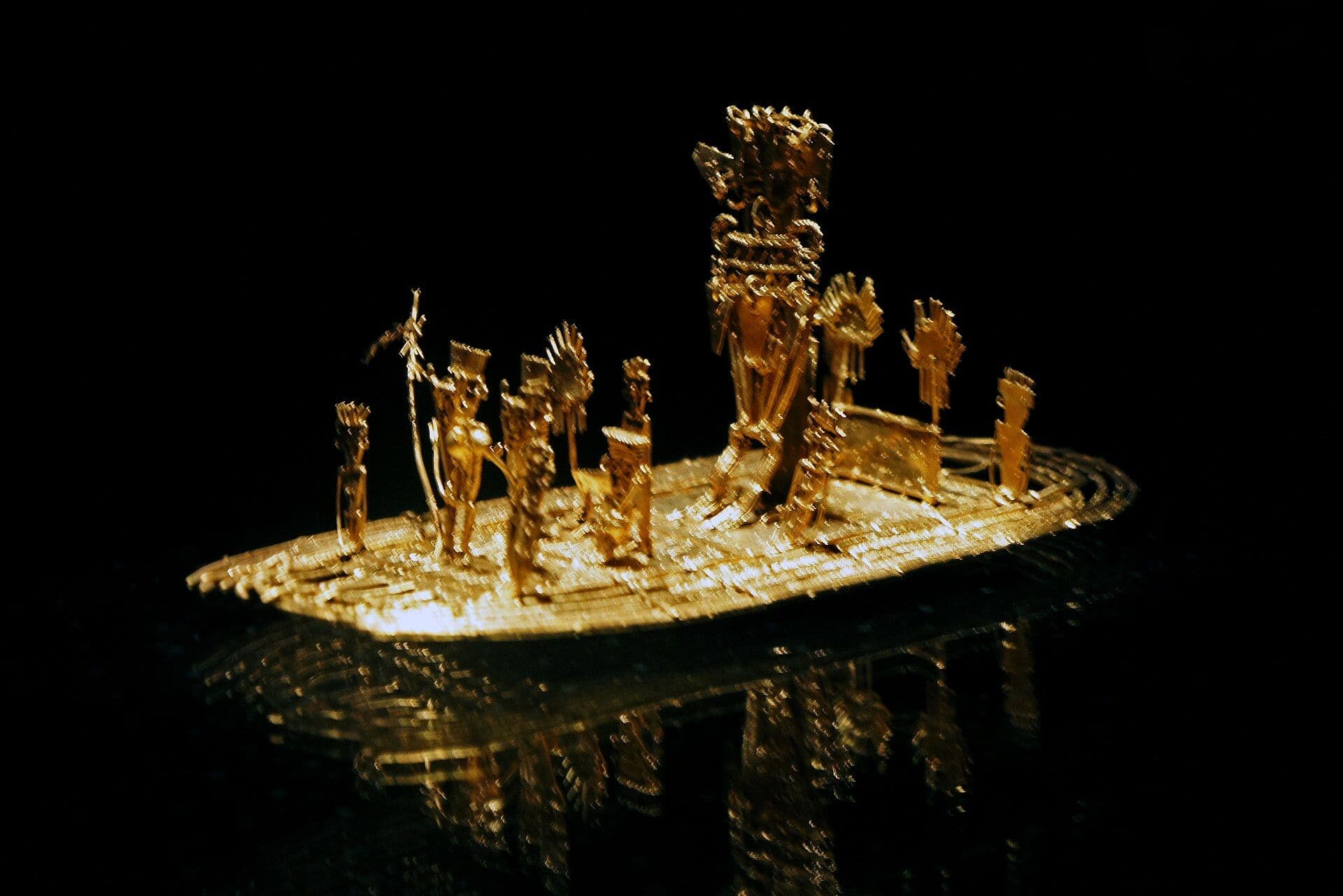
According to that account, when a new ruler took office, his body was covered in sticky resin and then powdered with gold dust. He boarded a raft of reeds with four principal chiefs, loaded with gold objects and emeralds. In the centre of the lagoon, while people watched from the shore with fires burning, he threw the treasures into the water and bathed, washing off the gold.
Historians treat the description with caution: it was written a century after the conquest and passed through several hands. But it fits what archaeology knows about Muisca offerings, which were often made in lakes and other sacred places.
Draining a sacred lake
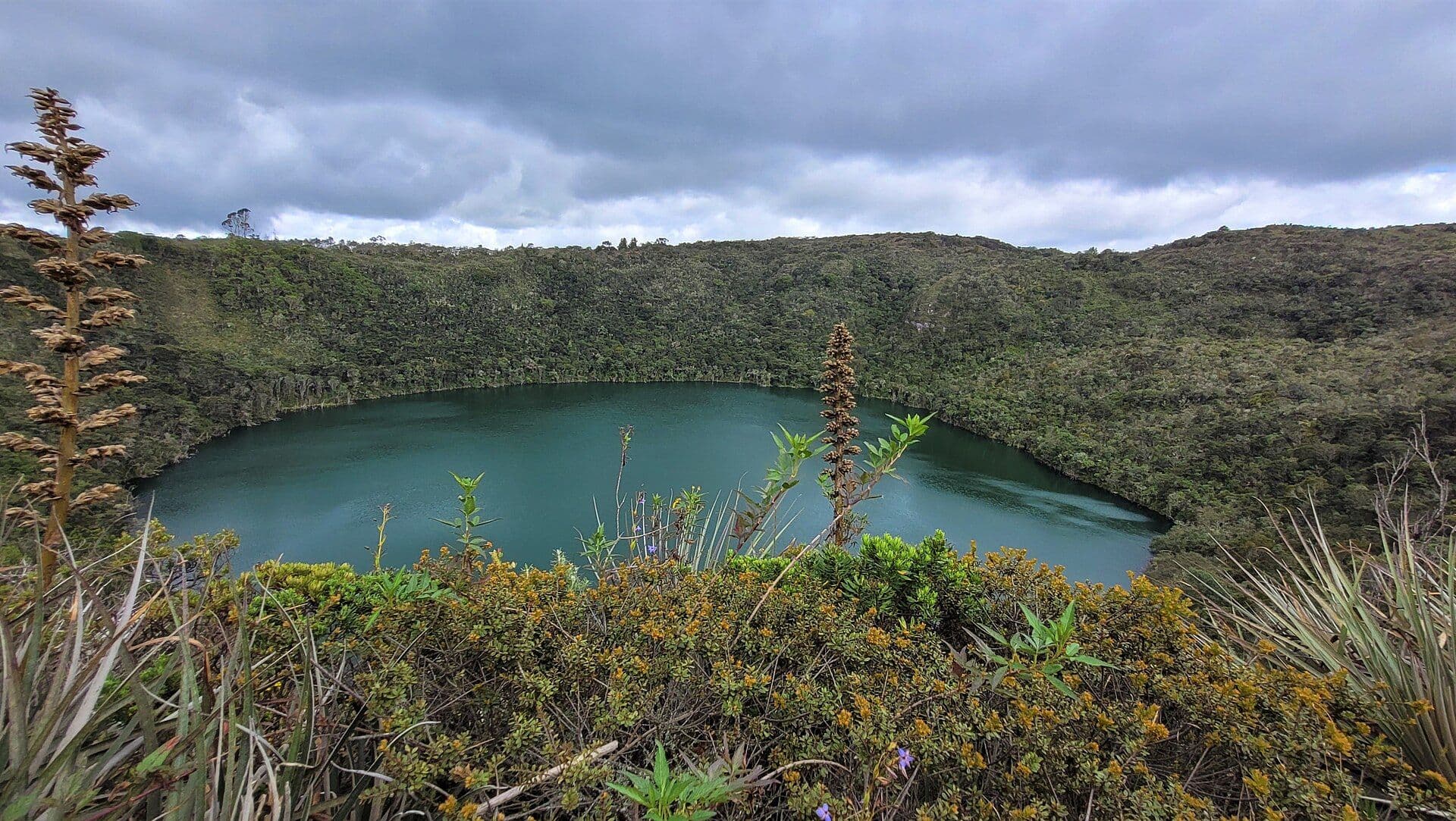
Once the story spread, Guatavita became a target. In the 1580s a Spanish merchant, Antonio de Sepúlveda, organised hundreds of workers to cut a deep notch in the rim of the lagoon to lower the water. The cut is still visible today. Some gold was recovered, but the walls collapsed and the project failed.
Other attempts followed over the centuries. Around 1900 a British company managed to drain much of the lagoon, but the exposed mud dried hard as stone before it could be searched. In the twentieth century the Colombian state protected the lagoon, and treasure hunting there is now prohibited.
From a man to a kingdom
As expeditions failed to find the “gilded man”, the legend grew. El Dorado became a golden city, then a kingdom, and its imagined location moved further into unexplored territory: the Orinoco, the Amazon, the Guianas. Expeditions such as those of Gonzalo Pizarro, Francisco de Orellana and Walter Raleigh were driven, in part, by this search.
No golden city was ever found. What remained was a word that entered every European language to mean a place of impossible wealth.
Plan your visit
Practical notes for travelling there. Conditions, schedules and prices change: check before you go.
- Base town
- Bogotá · Guatavita · Sesquilé
- Best time to go
- The drier months, around December to March and July to August, are best for the trail. Mornings are usually clearer.
- Getting there
- The lagoon lies north-east of Bogotá, roughly two hours by road. It is a protected reserve visited on guided walks along a trail to the rim; swimming and treasure hunting are forbidden. Many visitors combine it with the town of Guatavita and the Salt Cathedral of Zipaquirá.
Good to know
- The trail climbs to about 3,000 m: walk slowly.
- Visits are guided and the reserve closes on some days; check the schedule before going.
- Bring a rain jacket: the weather changes quickly in the Andes.
- Bogotá’s Museo del Oro holds the Muisca raft linked to the legend.
Related stories
Nature & Geography·Colombia
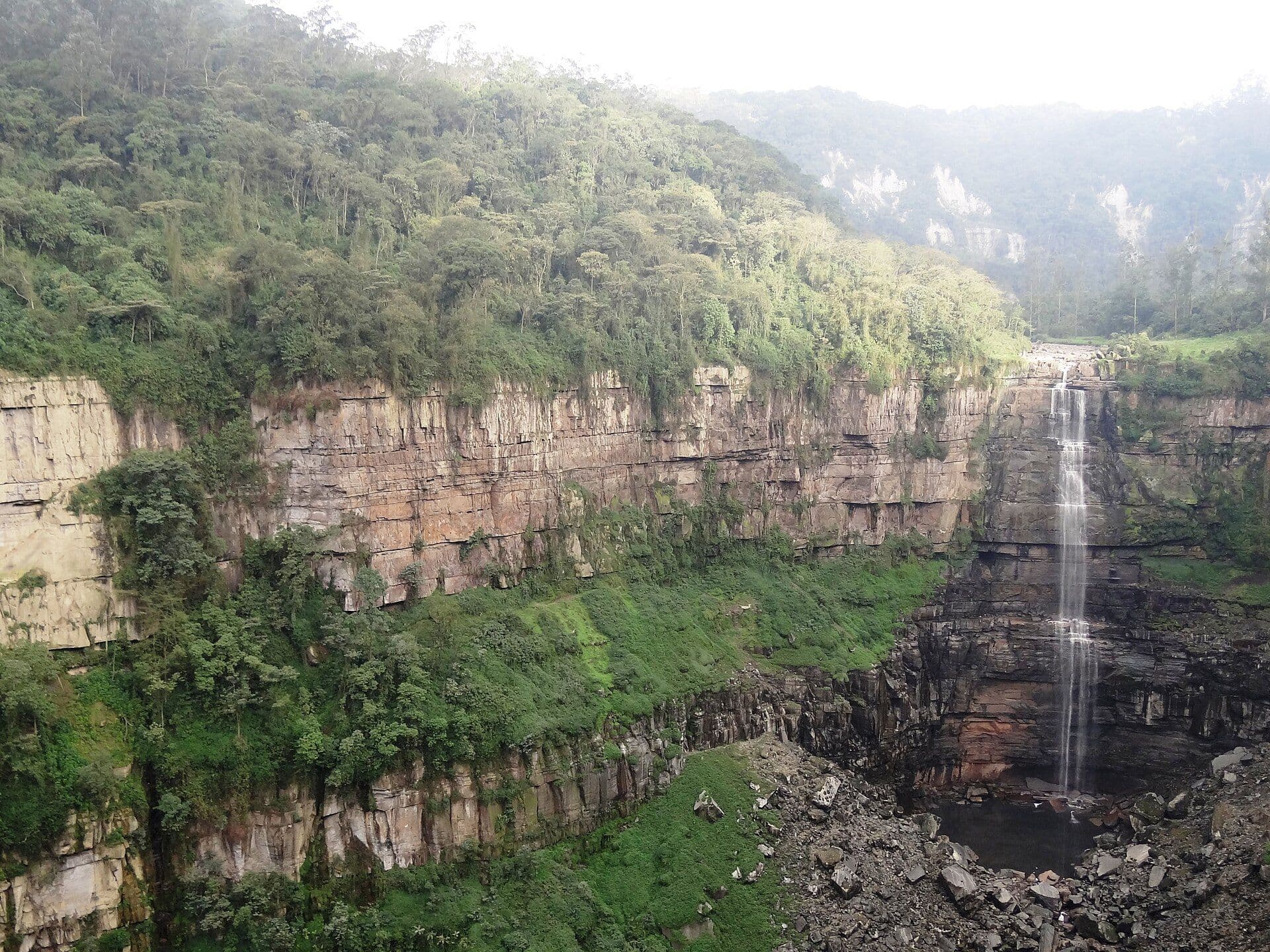
Tequendama Falls: Bochica breaks the rock
A flood covered the savannah of Bogotá. A white-bearded sage opened the mountain with his staff, and the water poured away down a waterfall.
Extraordinary Places·Colombia
Iguaque Lagoon: Bachué, the Muisca mother of humanity
From a lagoon high in the páramo a woman emerged carrying a child. From them, the Muisca say, we are all descended.
Nature & Geography·Colombia
Caño Cristales: the river where the rainbow fell
Between June and November, a river in the Serranía de La Macarena turns red, yellow, green and blue.