Tiwanaku, the city that came before the Incas
Near the shore of Lake Titicaca, a people without writing built one of the great ceremonial capitals of the ancient Americas.
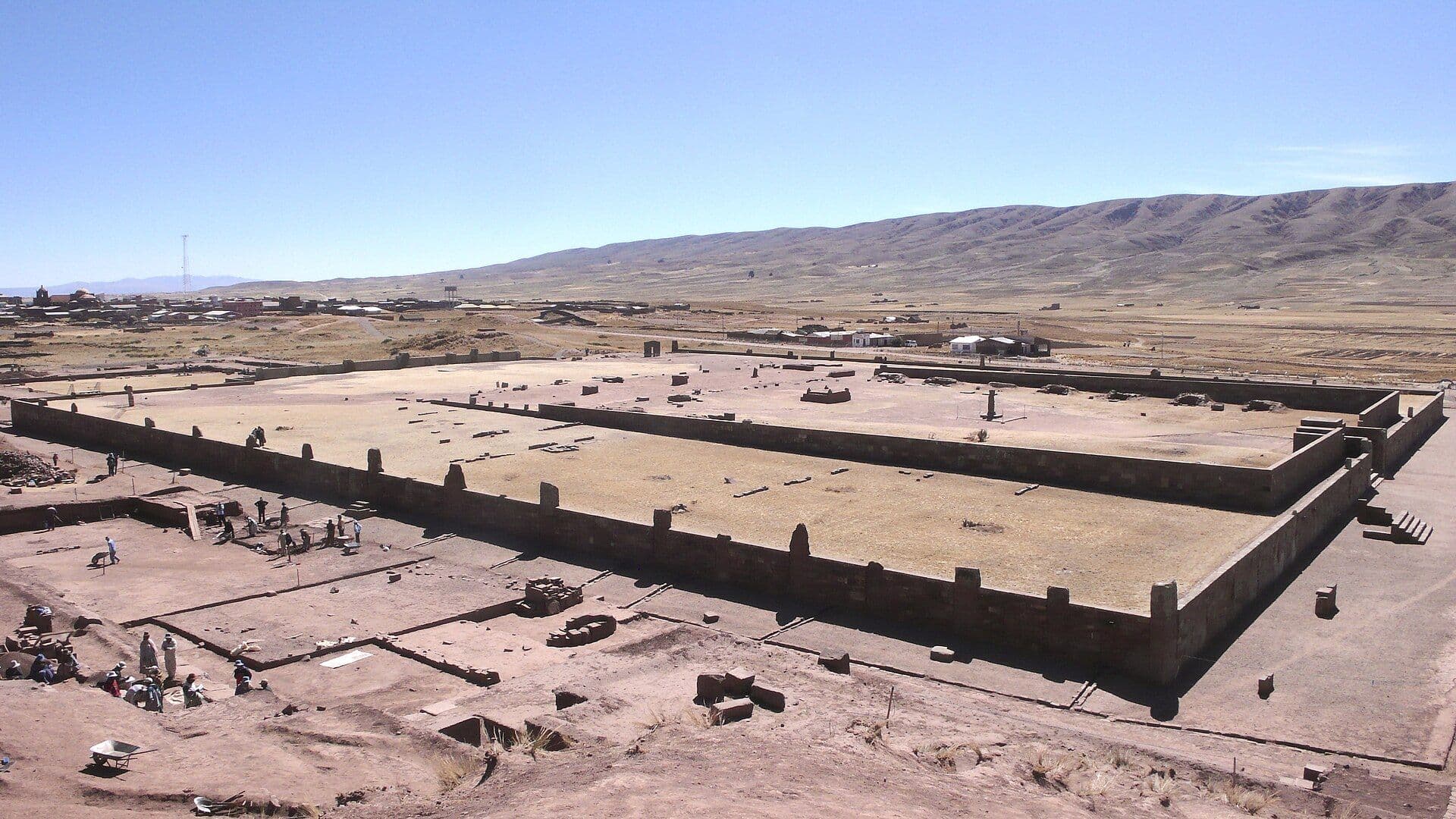
When the Incas reached the southern shore of Lake Titicaca, Tiwanaku was already in ruins. They did not know who had built it, and they did what people often do with an impressive past they cannot explain: they made it the place where the world was created. Archaeology has since recovered part of the real story, and it is no less remarkable.
A capital on the high plateau
Tiwanaku began as a farming village and grew, over centuries, into a city and ceremonial centre whose influence reached what are today southern Peru, northern Chile and parts of Argentina. Its period of greatest power is usually placed between roughly AD 500 and 1000.
Living at nearly 4,000 metres is difficult, and Tiwanaku’s success depended on agriculture adapted to the cold. Its people used raised fields, known in Aymara as suka kollus: platforms of earth separated by channels of water that softened night frosts and kept the soil fertile. They also herded llamas and alpacas, whose caravans connected the city with distant valleys.
Stones that were meant to impress
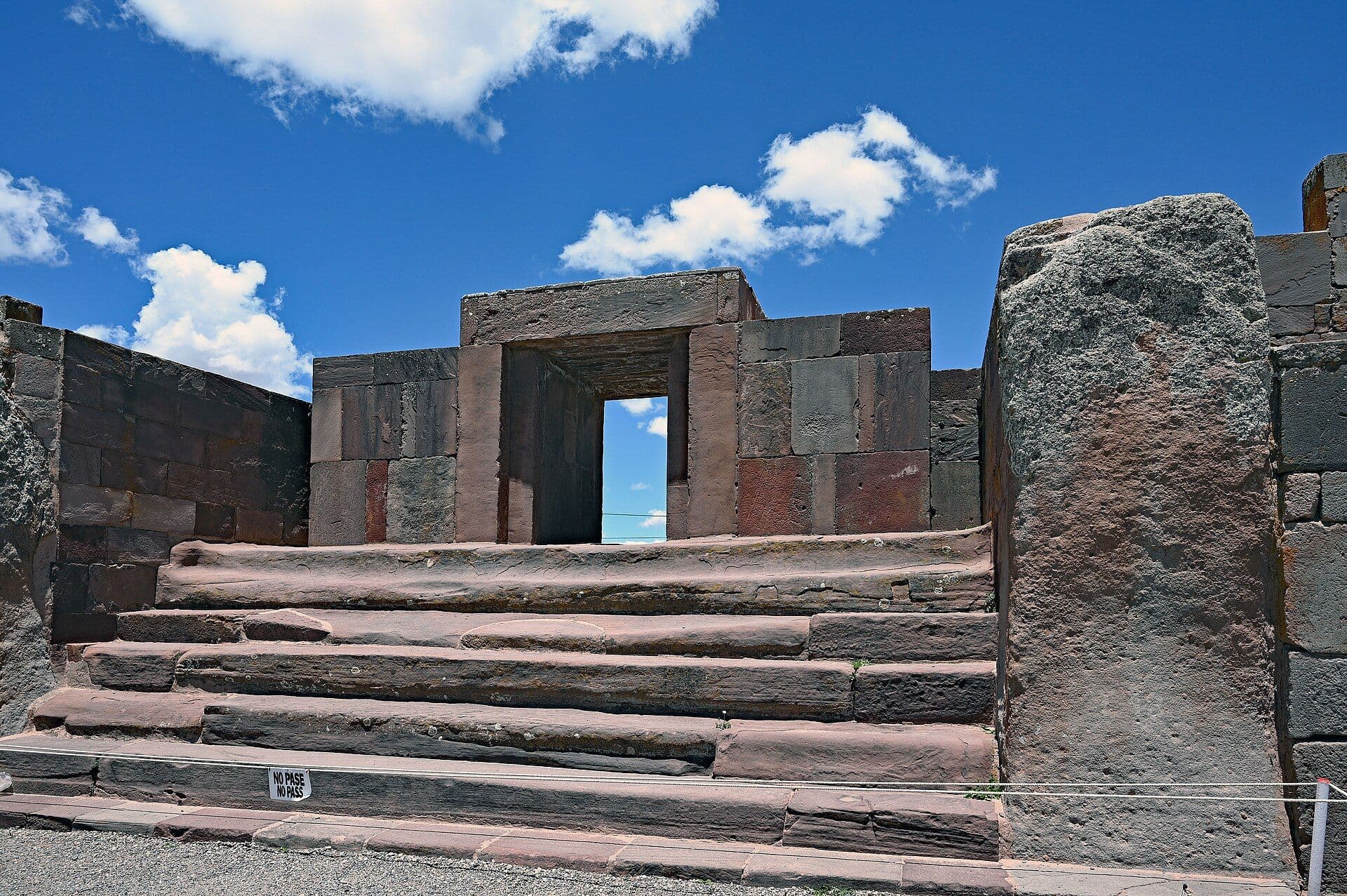
The core of the site is a group of monumental structures. The Akapana is a stepped platform, partly natural hill and partly built, that was once faced with cut stone. Beside it stands the Kalasasaya, a large rectangular enclosure whose walls alternate tall pillars with smaller blocks. The semi-subterranean temple nearby has walls studded with carved stone heads.
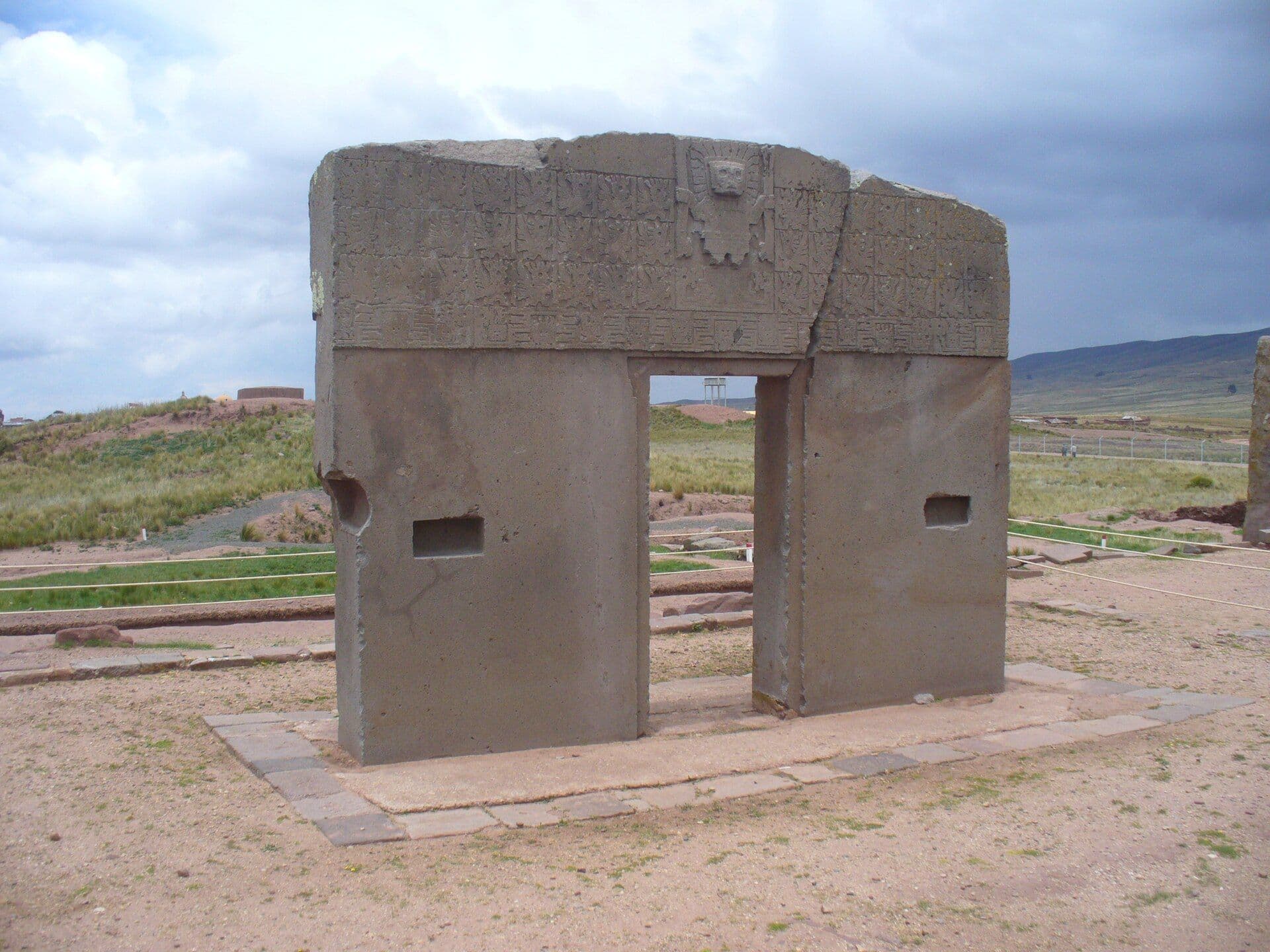
Inside the Kalasasaya stands the most famous object of Tiwanaku: the Gate of the Sun, cut from a single block of andesite. Its central figure holds a staff in each hand and is surrounded by rows of smaller winged figures. Similar images appear across the southern Andes, which suggests that the cult represented here travelled far beyond the city.
Why did Tiwanaku decline?
Around AD 1000–1150 the city lost its power and was gradually abandoned as a political centre. The most discussed explanation is a long period of drought, identified in ice cores and lake sediments, that would have damaged the raised-field agriculture the city depended on.
Other researchers stress political and social causes: tensions between the groups that made up the state, or the breakdown of the networks of exchange that sustained it. The two explanations are not exclusive, and the debate is still open.
The origin of the world
Spanish chroniclers recorded that the Incas considered Tiwanaku a sacred place connected with creation. In one version, Viracocha made a first race of giants there, destroyed them with a flood and then created the peoples of the earth from stone, giving each its dress and its language before sending them out to their lands.
These stories tell us how the Incas understood a ruin that was already ancient to them. They are not a record of how Tiwanaku was actually built.
A living site
Tiwanaku is not only an archaeological park. Every year around 21 June, the southern winter solstice, thousands of people gather there before dawn to celebrate the Aymara New Year, raising their hands to greet the first rays of the sun. The celebration, in its present form, is recent, but it shows how the site continues to matter to the people who live around it.
Plan your visit
Practical notes for travelling there. Conditions, schedules and prices change: check before you go.
- Base town
- La Paz (Bolivia)
- Best time to go
- The dry season, May to October. On 21 June the Aymara New Year brings thousands of people to the site before dawn — a unique experience, but very crowded and very cold.
- Getting there
- Tiwanaku is about 70 km west of La Paz, between one and a half and two hours by road. Day tours leave from La Paz every day; public minibuses also run from the city. The ticket includes the archaeological park and its two museums.
Good to know
- Wear a hat and sunscreen: there is little shade on the site.
- Visit the museums: the great monoliths are kept indoors.
- A guide makes the site far easier to understand.
- The site is at about 3,850 m.
Related stories
Extraordinary Places·Bolivia
The toborochi: the tree that shelters a mother (Santa Cruz, Bolivia)
Its trunk swells like a belly. The Guaraní know who is hiding inside.
Legends & Folklore·Bolivia
Lake Titicaca, where the Andean world began
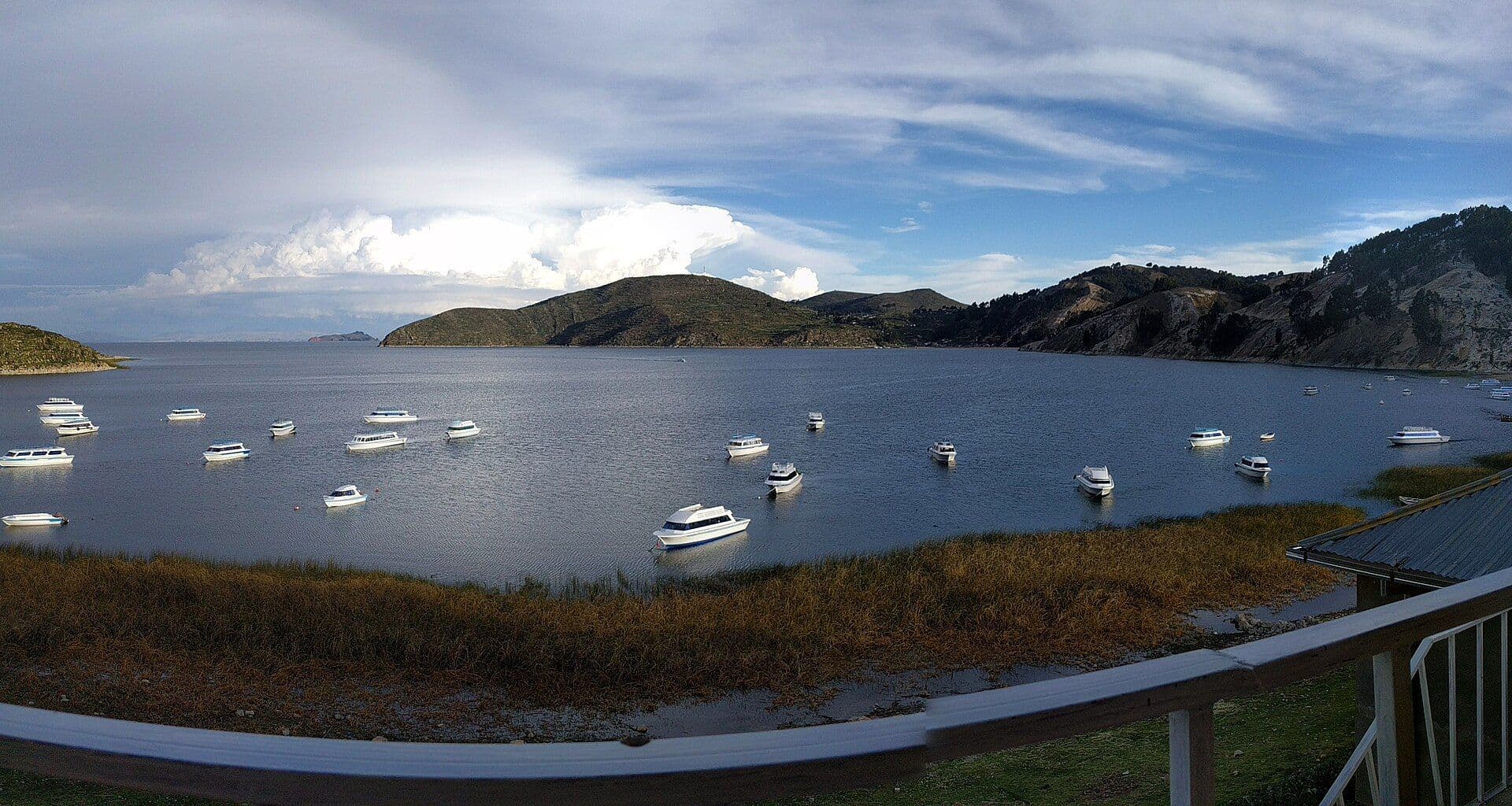
For the Incas the sun and the first rulers rose from these waters. Archaeologists are still finding what earlier peoples left beneath them.

Nature & Geography·Bolivia
Salar de Uyuni: how an ancient lake became a desert of salt
The largest salt flat on Earth was once covered by enormous lakes. The Aymara tell a different story: the tears and milk of a mountain.