Culture & Traditions·Argentina
Quebrada de Humahuaca: feeding the Pachamama
Every 1 August, in northern Argentina, a hole is opened in the ground to feed Mother Earth. It is a living rite.
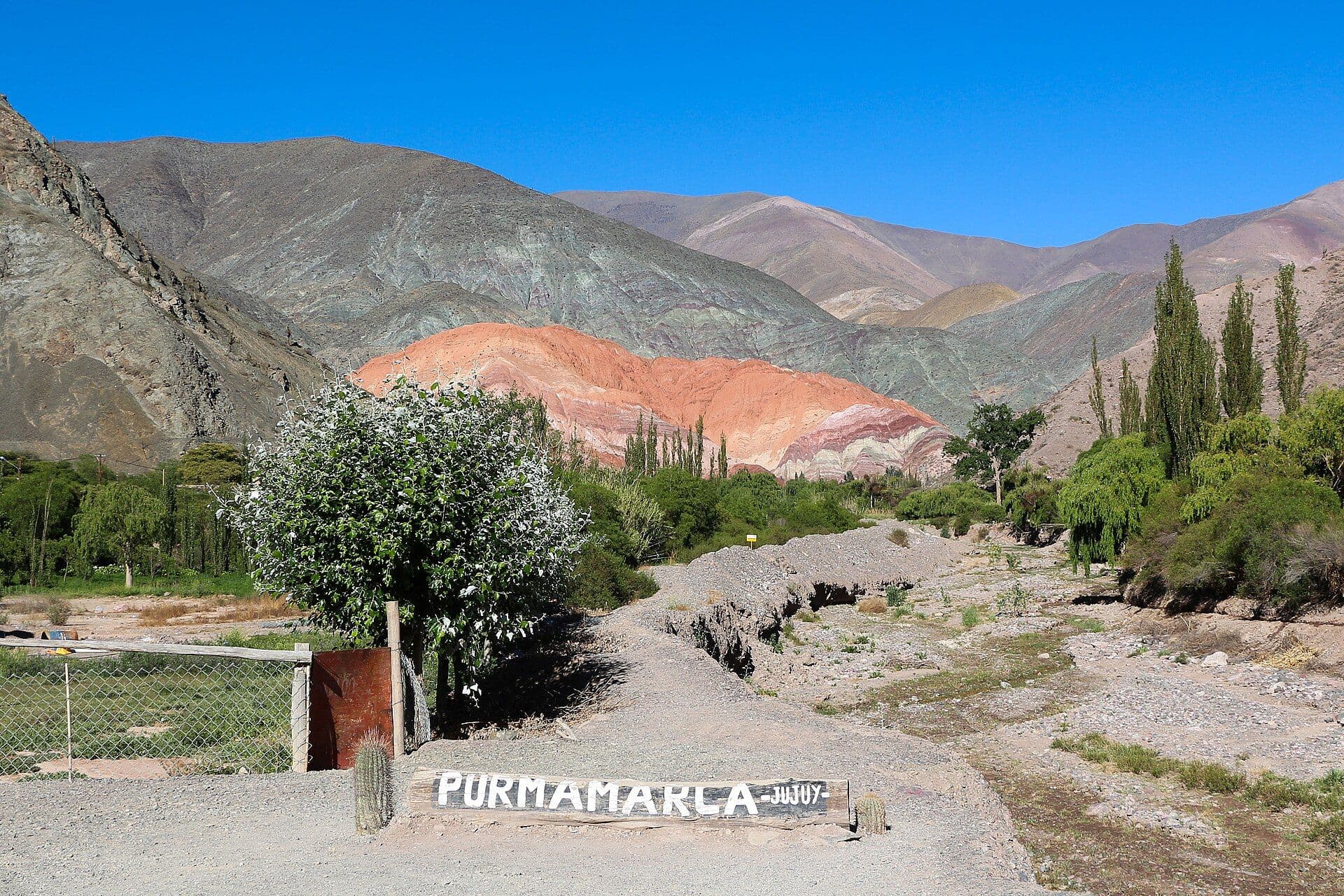
The Quebrada de Humahuaca, in Jujuy, is a valley of coloured mountains — like the Hill of Seven Colours at Purmamarca — that has served as a route for Andean peoples for 10,000 years. Here, as throughout the Andean world, the earth is not an object: it is the Pachamama, Mother Earth, who gives and who also hungers.
The Pachamama
For the Coya and other Andean peoples of northern Argentina, Bolivia and Peru, the Pachamama is the mother who gives harvests, animals and life. But she does not give for free: she must be repaid. August, at the end of the dry winter and before sowing, is the month when “the earth is open” and hungry.
The corpachada
On 1 August (and throughout the month) each family or community digs a hole in the ground, the “mouth” of the Pachamama. There they offer the best they have: cooked food (stews, tamales, maize), chicha, wine, coca leaves and cigarettes. Each participant speaks to her, thanks her and asks her for something. Then the hole is covered with stones. The rite is called the corpachada, from a Quechua word meaning “to feed” or “to give lodging”. Houses are also purified with the smoke of herbs.
Caña con ruda
In northern and northeastern Argentina, people drink a shot of caña con ruda — cane spirit steeped with rue — on an empty stomach on 1 August, to protect themselves from the ills of winter. Its origin is attributed to different places (Guaraní in the northeast, Andean in the north); it is a popular custom, not a proven historical fact.
The valley
The Quebrada de Humahuaca has been a UNESCO World Heritage cultural landscape since 2003: a route used for 10,000 years, with pucarás (fortresses) such as the one at Tilcara. The listing helped revitalise and make visible the Pachamama celebrations.
Plan your visit
Practical notes for travelling there. Conditions, schedules and prices change: check before you go.
Good to know
- Purmamarca (Hill of Seven Colours), Tilcara (its pucará fortress), Humahuaca and the Serranía de Hornocal (the hill of fourteen colours).
- In August, several communities allow visitors to take part respectfully in the ceremony.
Related stories

Nature & Geography·Argentina
Patagonia: Elal, the hero who arrived at El Chaltén on a swan
The Tehuelche say their creator hero crossed the sea on a swan and landed on the summit of Fitz Roy. From there he spread life across Patagonia.
Peoples & Communities·Argentina
Tierra del Fuego: the Hain, the secret of the Selk’nam
At the end of the world, Selk’nam men painted their bodies and became spirits. It all began, they said, with a lie told by the women and a fight between the Sun and the Moon.
Legends & Folklore·Argentina
Iguazú Falls: the legend of Naipí and Tarobá
A serpent god tore the earth open to keep two lovers apart. The oldest written version of the story was told beside the falls in 1901.