The toborochi: the tree that shelters a mother (Santa Cruz, Bolivia)
Its trunk swells like a belly. The Guaraní know who is hiding inside.
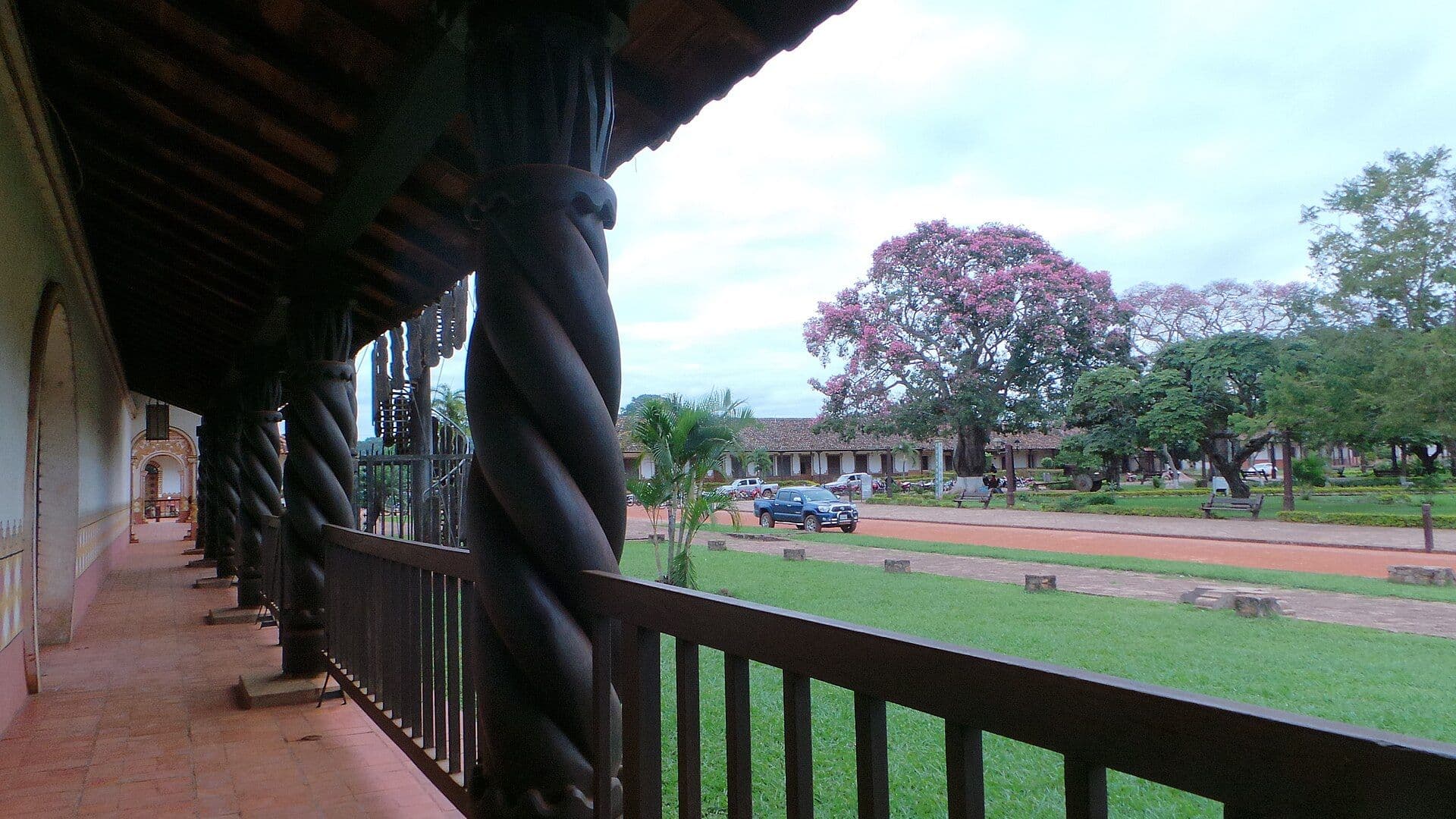
In the squares and along the roads of Santa Cruz de la Sierra, in eastern Bolivia, grows a tree with a pot-bellied, thorny trunk that fills with pink flowers in autumn: the toborochi (*Ceiba speciosa*). It is the symbol of Santa Cruz, and the Guaraní have an explanation for its shape.
The legend
Araverá, daughter of a great Guaraní chief, married Colibrí, the hummingbird god, and was expecting a son destined to become a great shaman who would put an end to the evil spirits, the Aña. The Aña found out and swore to kill her before the child was born.
Araverá fled across the sky on a small flying seat her husband had given her, but the Aña followed her everywhere. Exhausted, she came down to earth and hid inside the trunk of a toborochi. There her son was born, and he grew up to face the Aña. But Araverá never left the tree: every year, when the toborochi blooms, she comes out as pink flowers so that the hummingbirds can visit her.
Another version
The anthology compiled by Delio Alcaraz Masías gives a different version, from the Chaco and Tarija: the young woman Imaybé, turned into a toborochi by the god Tumpa to protect her as she fled from the Spaniards.
The tree
Ceiba speciosa (formerly Chorisia speciosa), a relative of the kapok tree.
Its swollen trunk stores water for the dry season; the thorns protect it.
It blooms pink roughly between March and June, and its fruits produce a cotton-like fibre.
Plan your visit
Practical notes for travelling there. Conditions, schedules and prices change: check before you go.
Good to know
- Toborochi trees grow throughout Santa Cruz de la Sierra: squares, avenues and the Botanical Garden.
- Combine the visit with the Jesuit Missions of Chiquitos (UNESCO World Heritage) and Amboró National Park.
Related stories
Legends & Folklore·Bolivia
Lake Titicaca, where the Andean world began
For the Incas the sun and the first rulers rose from these waters. Archaeologists are still finding what earlier peoples left beneath them.

Nature & Geography·Bolivia
Salar de Uyuni: how an ancient lake became a desert of salt
The largest salt flat on Earth was once covered by enormous lakes. The Aymara tell a different story: the tears and milk of a mountain.
Ancient Civilizations·Bolivia
Tiwanaku, the city that came before the Incas
Near the shore of Lake Titicaca, a people without writing built one of the great ceremonial capitals of the ancient Americas.